Turnkey Coal Washing & Beneficiation Solutions
Turnkey Stationary Coal Washing Plants (50 – 1000+ TPH)
Maximize Coal Value with Jig & Heavy Medium Cyclone Technology. Customized for Ash & Sulfur Reduction.
Fundada en 1999, LUTON GROUP CO., LTD, como empresa anónima, cuenta con más de 22 años de experiencia en la exportación de plantas de concreto, plantas de asfalto, mezcladoras autocargables, trituradoras, plantas de mortero seco, equipos de lavado de carbón y diversos tipos de maquinaria de construcción.
¡Obtenga un presupuesto gratuito!
Carbón en bruto
El carbón en bruto se refiere a los productos extraídos de las minas de carbón. Solo se ha separado manualmente la ganga y los residuos, pero no se ha lavado, cribado ni procesado. Incluye el coque natural y el carbón de baja calidad, pero excluye los carbones de bajo poder calorífico (como el carbón de piedra, la turba, el esquisto bituminoso, etc.). Según su origen, el carbón en bruto se puede dividir en tres categorías: carbón sapropélico, carbón húmico y carbón humosapropélico. Según su grado de carbonización, se puede clasificar en turba, lignito, carbón bituminoso y antracita.

Lavado de carbón
Mediante el impacto del flujo de agua, el carbón crudo con diferentes componentes y proporciones se separa en diferentes grados, eliminándose el polvo y la roca estéril y reduciéndose el contenido de cenizas y azufre. Esto se denomina lavado de carbón.

¿Por qué lavar el carbón?
El lavado del carbón es un proceso indispensable en el procesamiento profundo del carbón. El carbón extraído directamente de la mina se denomina carbón crudo. El carbón crudo se mezcla con muchas impurezas durante el proceso de extracción, y la calidad del carbón también es diferente. El carbón con bajo contenido de cenizas internas y alto contenido de cenizas internas se mezcla. El lavado del carbón es un proceso industrial que elimina las impurezas del carbón crudo o clasifica el carbón de alta calidad y el carbón de baja calidad.
Los productos obtenidos tras el proceso de lavado del carbón se dividen generalmente en ganga, carbón medio, carbón limpio de grado B y carbón limpio de grado A. El carbón acabado tras el proceso de lavado se denomina normalmente carbón limpio. Mediante el lavado del carbón, se puede reducir el costo de transporte del carbón y aumentar su tasa de utilización. El carbón limpio es generalmente una fuente de energía que puede utilizarse como combustible, y el carbón limpio procedente del carbón bituminoso se utiliza generalmente para la coquización. Es necesario eliminar el azufre, las impurezas y otros procesos industriales para cumplir con las normas de coquización.
A Complete 4-Stage Coal Washing Process
Coal washing is not just about rinsing coal with water. It is a precise engineering process based on density separation and surface chemistry. Here is how our stationary plant transforms your raw run-of-mine (ROM) coal into clean, marketable fuel.
1. Crushing & Sizing (Feed Preparation)
Before washing, the raw coal must be prepared to the optimal particle size to release impurities.
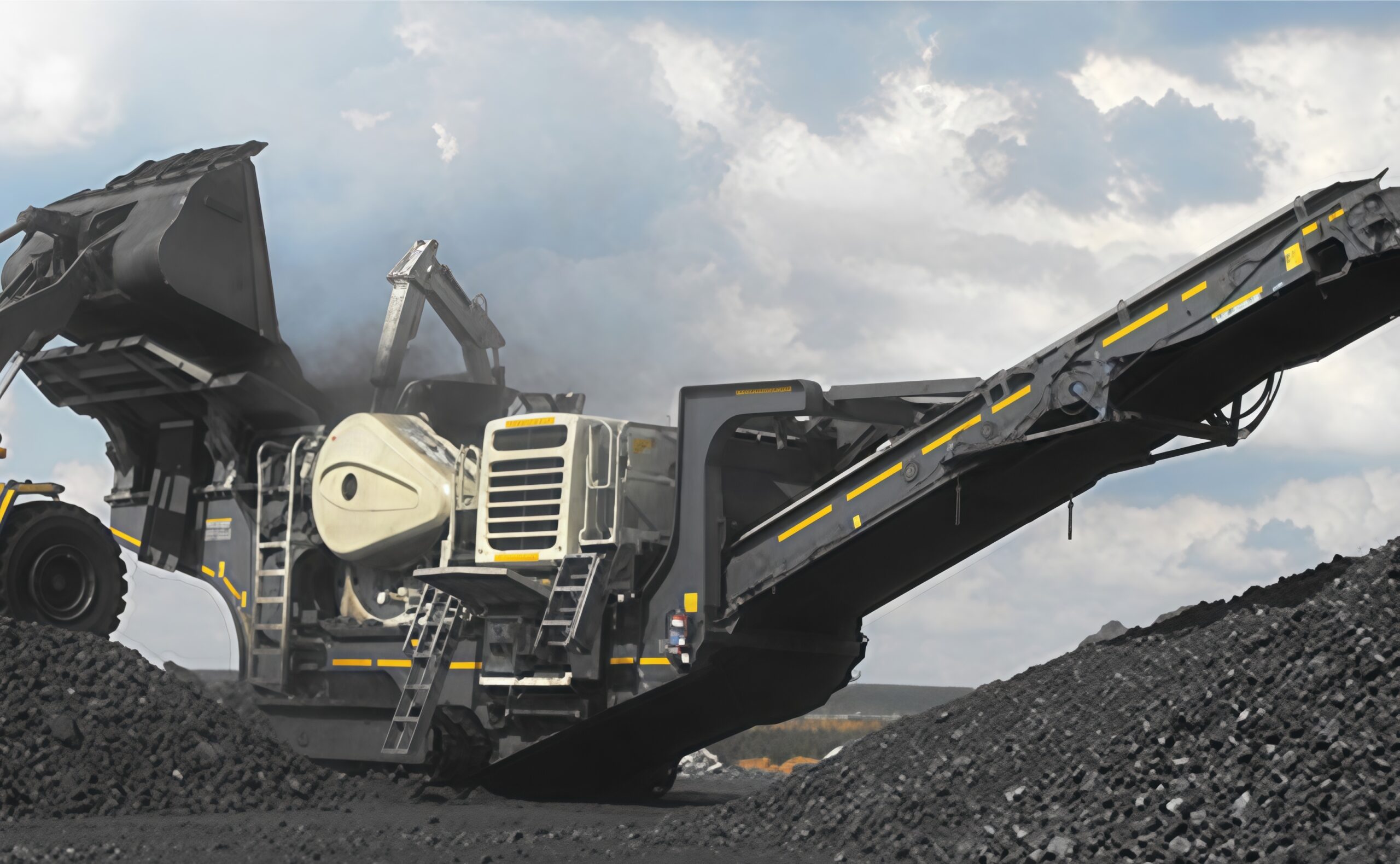
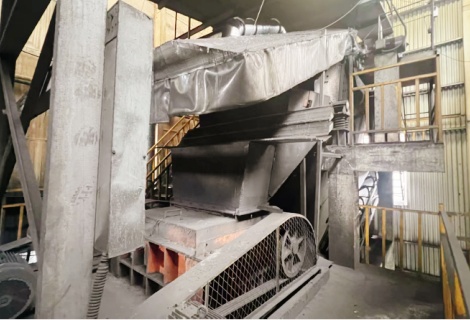
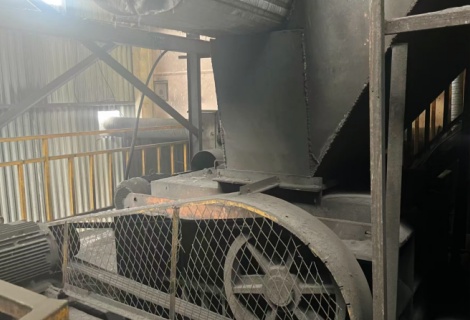
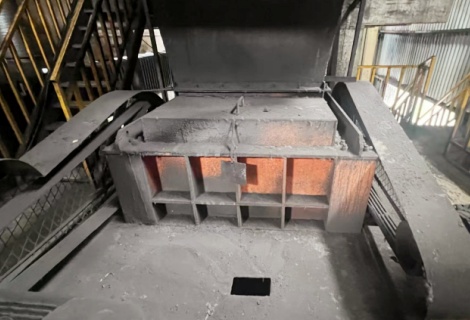
Primary Crushing: The ROM coal passes through a Double Roll Crusher or Sizer to reduce large lumps to a manageable size (typically -50mm or -80mm) without generating excessive fines.
Desliming Screen: The crushed coal travels to a wet vibrating screen. Here, high-pressure water sprays remove the fine dust (slime) and wet the material, preparing it for the main separation stage.
Why it matters: Uniform particle size ensures the washing equipment operates at peak efficiency.
2. Density Separation (The Core Process)
Choose between Jigging or Heavy Medium Cyclone based on your coal quality.
Option A: Jig Stratification (For Thermal Coal)
The Principle: The Jig machine creates a vertical pulsating water flow.
The Action: Under the influence of gravity and water pulses, the material stratifies by density. Heavier rocks (Gangue) settle to the bottom and are discharged via the refuse gate. Lighter Clean Coal floats to the top and overflows to the product chute.
Result: Effective removal of visible rock and shale.
Option B: Heavy Medium Cyclone – HMC (For Coking Coal)
The Principle: This process uses a “Medium” (a suspension of water and magnetite powder) to create a precise density liquid (e.g., 1.50 g/cm³).
The Action: The coal and medium are pumped into a cyclone at high pressure. Centrifugal force (up to 200G) forces the heavy High-Sulfur refuse and Pyrite to the outer wall, while the light Clean Coal stays in the center vortex.
Result: The most precise separation possible (Ep < 0.04), crucial for reducing Sulfur and Ash to steel-grade standards.

3. Fines Recovery (Froth Flotation)
Fine coal particles (< 0.5mm) that pass through the screens are sent to the Flotation Cells or Columns.
Surface Chemistry: We add specific reagents (collectors and frothers). The chemical renders the coal surface hydrophobic (water-repelling), while ash and clay remain hydrophilic (water-attracting).
Air Bubbles: Air is injected into the slurry. The fine coal particles attach to the rising air bubbles and float to the surface as a mineralized froth, which is skimmed off as clean concentrate.
Outcome: Maximizes total plant yield by recovering valuable carbon from what would otherwise be waste sludge.

4. Dewatering & Water Recycling (Closed Circuit)
The washed products are wet and need drying before transport.
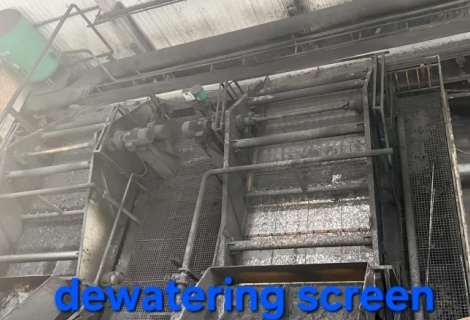
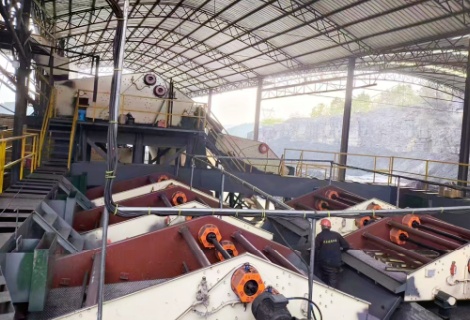
For Coarse Coal: We use Linear Dewatering Screens and Centrifuges to mechanically remove surface moisture, bringing it down to transportable levels (< 9-12%).
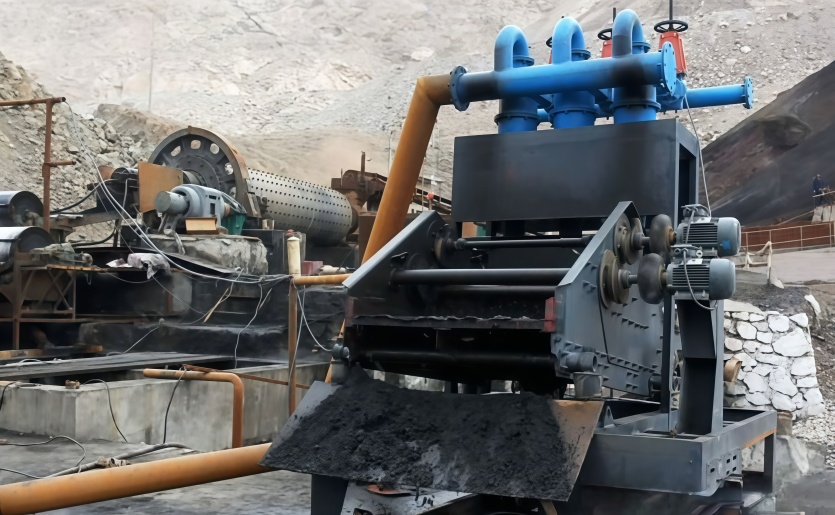
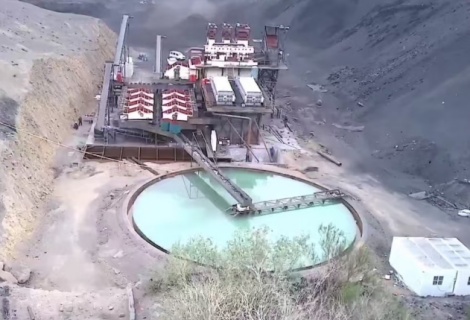
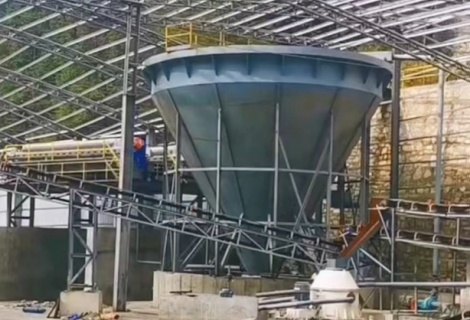
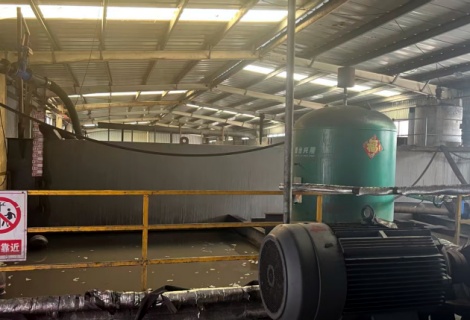
For Tailings & Sludge: The waste water is pumped into a High-Rate Thickener. Flocculants are added to settle the solids rapidly. The clean water overflows and is recycled back to the plant (recovering up to 90% of process water). The thick sludge at the bottom is pressed into dry cakes by a Filter Press.
Advanced Beneficiation Technologies in Coal Washing Process
Choose the right process to maximize your coal recovery rate and profit margin.
Jig Washing Process
The Cost-Effective Solution for Thermal Coal & De-stoning.

Our advanced Jig concentrators utilize air-chamber pulsation technology to separate raw coal from gangue based on density differences. This process is ideal for easy-to-wash coal where removing visible rock and shale is the primary goal.
Key Advantages:
- Low Operating Cost (OPEX): Consumes less water and electricity compared to HMC.
- Wide Size Range: Effectively handles large particles (up to 100mm) without pre-crushing.
- High Capacity: Single unit capacity can exceed 300 TPH.
- Perfect For: Thermal Coal (Steam Coal) upgrading and Gangue rejection.
Heavy Medium Cyclone
The Ultimate Precision for Ash & Sulfur Reduction.

For difficult-to-wash coal or when strict quality standards are required, HMC is the industry standard. utilizing centrifugal force (up to 200x gravity) and a magnetite medium, it achieves sharp separation densities. This is the only effective way to remove Pyritic Sulfur and deeply reduce ash content.
Key Advantages:
- Maximum Recovery: 95-99% organic efficiency. Don’t lose good coal to the waste pile.
- Deep De-Sulfurization: specifically separates high-density Pyritic Sulfur from clean coal.
- Precise Control: Cut-point density can be adjusted automatically (e.g., from 1.3 to 1.8).
- Perfect For: Coking Coal, Anthracite, and High-Sulfur Coal projects.
Which Technology is Right for You?
| Feature | Jig Washing | Heavy Medium Cyclone |
| Main Goal | Remove Rock/Gangue | Precision Ash/Sulfur Control |
| Separation Accuracy | Good (Ep 0.15-0.18) | Excellent (Ep 0.02-0.04) |
| Operating Cost | Low | Medium – Requires Magnetite |
| Ideal Coal Type | Thermal Coal (Power Plants) | Coking Coal (Steel Plants) |
Industrial Modular Design: Built for Mining
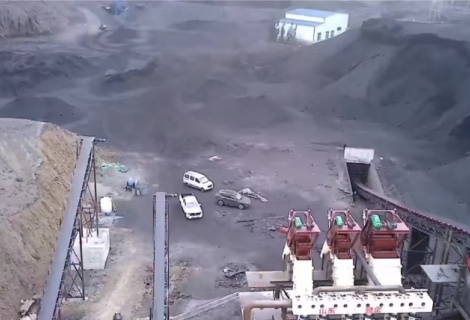
Abandon the complexity of civil construction. We deliver a high-performance CHPP (Coal Handling and Preparation Plant) that is easy to install and built to last.
1. Scientific Gravity-Flow Layout (Vertical Structure)
We design our steel structure vertically to maximize gravity flow.
Energy Saving: Cyclones are positioned on the top deck to allow gravity feeding to screens, reducing the need for slurry pumps and electricity consumption.
Compact Footprint: By building “Up” instead of “Out”, we save land space and conveyor belt length.
2. Heavy-Duty Vibration Resistance
Vibrating screens create massive dynamic loads. Ordinary steel frames crack under this stress.
Reinforced Design: Our structural beams are calculated to withstand the high-frequency G-force of dewatering screens.
Shock Absorption: Critical modules are equipped with industrial rubber dampeners to isolate vibration from the main structure.
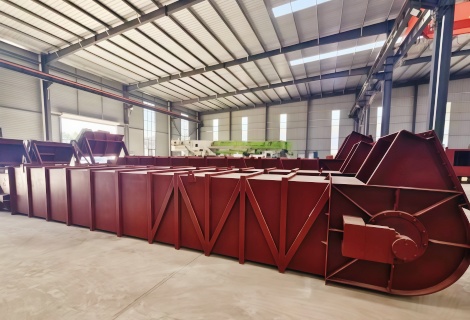
3. Skid-Mounted Modules (Pre-assembled)
Accelerate your commissioning time with our Skid-Mounted technology.
Plug & Play: Key units (like the Cyclone Cluster and Magnetic Separator) are pre-piped and pre-wired on steel skids in our factory.
Less Site Work: Minimizes on-site piping work, which is the most time-consuming part of coal plant installation.
Conjuntos completos de equipos de lavado de carbón
El sistema de procesamiento de carbón en superficie consta de etapas principales como la recepción, el cribado, la trituración, la preparación, el almacenamiento y la carga del carbón. El proceso de lavado del carbón incluye principalmente lo siguiente:
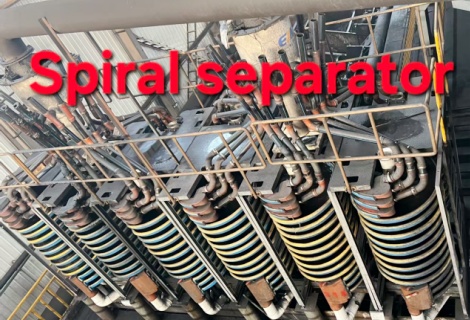
1. Después de la trituración y el cribado, el carbón crudo se carga en la tolva y el carbón de menos de 80 mm se envía a la mesa vibratoria a través de la cinta transportadora. Tras el proceso de separación, se separan el carbón limpio, el carbón medio y la ganga; la ganga y el carbón medio se descargan a través del elevador. El carbón limpio se envía a la criba de deshidratación lineal a través del agua, se recoge y se transporta al sitio de almacenamiento mediante una cinta transportadora.

2. El agua descargada debajo de la criba lineal de deshidratación de carbón limpio fluye hacia la criba de recuperación de carbón pulverizado. Después de deshidratar el carbón pulverizado de más de 0,3 mm, este entra en la centrifugadora para su secado y, a continuación, el carbón limpio, que se mezcla con otro carbón limpio, se transporta al sitio de almacenamiento de carbón limpio mediante una cinta transportadora.

3. El agua limosa de menos de 0,3 mm sale de la criba de recuperación de carbón pulverizado. Después de que el agua limosa flota, entra en el tanque de espesamiento para su precipitación y, a continuación, se deshidrata en lodos de residuos mediante el filtro prensa, tras lo cual se transporta al sitio para su almacenamiento mediante una cinta transportadora.

Customized Solutions for Your Coal Type
Don’t guess. Match the right beneficiation process to your raw material to maximize profit.
1. Steam / Thermal Coal
The Goal: Increase Calorific Value (CV)
The Challenge:
Your raw coal contains too much visible rock (gangue) and shale, which lowers the Calorific Value (kcal/kg) and increases transport costs. You need a high-volume solution to discharge heavy rocks efficiently.
Our Solution: Intelligent Jigging System
- Process: Uses water pulsation to separate high-density gangue from lighter coal.
- Benefit: Low Cost per Ton. No expensive heavy medium (magnetite) required. Perfect for raising 3000 kcal coal to 5000+ kcal.
- Core Equipment: Batac Jig / Air-Chamber Jig.
2. Coking / Metallurgical Coal
The Goal: Deep Reduction of Ash & Sulfur
The Challenge:
Steel mills have strict standards (e.g., Ash < 9%, Sulfur < 1%). Standard washing isn’t enough to remove Pyritic Sulfur or fine impurities. You need extreme precision to separate “Clean Coal” from “Middlings” (secondary fuel) and “Refuse”.
Our Solution: 3-Product Heavy Medium Cyclone (HMC)
- Process: Uses a magnetite medium and centrifugal force for a sharp density cut (Ep < 0.04).
- Benefit: Maximize Yield. Recover every gram of expensive coking coal while strictly controlling Ash and Sulfur levels.
- Core Equipment: Heavy Medium Cyclone Cluster + Magnetic Separator.
3. Coal Slime & Tailings
The Goal: Turn Waste into Profit
The Challenge:
Fine coal particles (-0.5mm) are often discarded as “slime” in settling ponds. This is wasted money and an environmental liability. Handling this wet, sticky mud is difficult.
Our Solution: Flotation & Mechanical Dewatering
- Process: Froth flotation captures fine coal particles, followed by high-pressure filtration.
- Benefit: Dry & Stackable Product. Turns liquid slurry into dry coal filter cakes (moisture < 20%) that can be sold immediately.
- Core Equipment: Flotation Column + Chamber Filter Press / Arc Screen.
Tips
“What if I have mixed coal?”
Most modern plants use a Combined Process: Jigs for coarse coal (+13mm) to save costs, and Cyclones for fine coal (-13mm) to ensure quality. We can design this hybrid flowsheet for you.
From Raw Coal to Profit
Stop Selling Raw Coal. Defeat Ash Penalties and Wasted Logistics.
Selling unwashed Run-of-Mine (ROM) coal forces you into a “buyer’s market” where you are powerless against strict Ash Penalties. Power plants and traders routinely deduct significant value for every 1% of excess ash and sulfur, often rejecting high-impurity shipments entirely. Furthermore, the logistics math is working against you: for every 30-ton truck of raw coal you ship, you are paying fuel and driver costs to transport 8 to 10 tons of worthless rock (gangue).
A washing plant changes this equation immediately. By removing the gangue on-site, you stop paying to transport waste. More importantly, you physically upgrade the material—transforming a low-grade 3,500 kcal product into a premium 5,500+ kcal fuel. This allows you to dictate pricing and shift your customer base from low-budget local kilns to high-paying international steel mills and power stations.





LUTON
SOMOS LOS MEJORES EN CONSTRUCCIÓN
Fundada en 1999, LUTON GROUP CO., LTD, como sociedad anónima, cuenta con más de 24 años de experiencia en la exportación de plantas de concreto, plantas de asfalto, mezcladoras autocargables, trituradoras, plantas de mortero seco y diversos tipos de maquinaria de construcción.
100+
Más de 100 países exportados
30,000+
Más de 30.000 mezcladoras vendidas
20+
Más de 20 años de experiencia
100%
100% Calidad garantizada
ENVÍO
Nuestro proceso de envío
Proceso
En cada paso de nuestro proceso de envío, nuestro dedicado equipo se preocupa de que su pedido se gestione con la máxima profesionalidad y atención al detalle. Somos conscientes de la importancia de su satisfacción y nos esforzamos por superar sus expectativas en cada envío.


Pida
24 en línea para su pedido
Producción
Recogida de existencias o productos
Paquete
Bien embalado y etiquetado
Envío
Entrega rápida en 7 días
EQUIPO